
Web drawing on the experiences of the atc sites, this tool offers key considerations for health systems and provider practices looking to integrate screening for aces and trauma into their clinical workflow, including when and how to screen, and the importance of identifying appropriate referral pathways. The term adverse childhood experiences (aces) refers to a range of events that a child can experience, which leads to stress and can result in trauma and chronic stress responses. Think of it as a cholesterol score for childhood toxic stress. You can find a sample of the questionnaire and more information and resources about aces at the centers for disease control and prevention website. · creating safe physical and emotional environments at home, in school, and in neighborhoods.
Web screening for aces helps primary care clinicians assess risk for toxic stress and guide effective responses. 2) read the ace definitions and identify What is the aces questionnaire? Below is a list of 10 categories of adverse childhood experiences (aces). Web the pearls tool is a unique tool that assess for both adverse childhood experiences (“aces”) such as abuse, neglect, and household challenges, and related events, such as discrimination, food insecurity, and community violence, thought to.
Web adverse childhood experiences (aces) questionnaire use. · helping children identify feelings and manage emotions. Web parents, teachers and caregivers can help children by: Over time these experiences can affect your child’s health and wellbeing. You can find a sample of the questionnaire and more information and resources about aces at the centers for disease control and prevention website.
Printable Ace Test

What Is an ACE Score and How Does It Impact My Classroom?
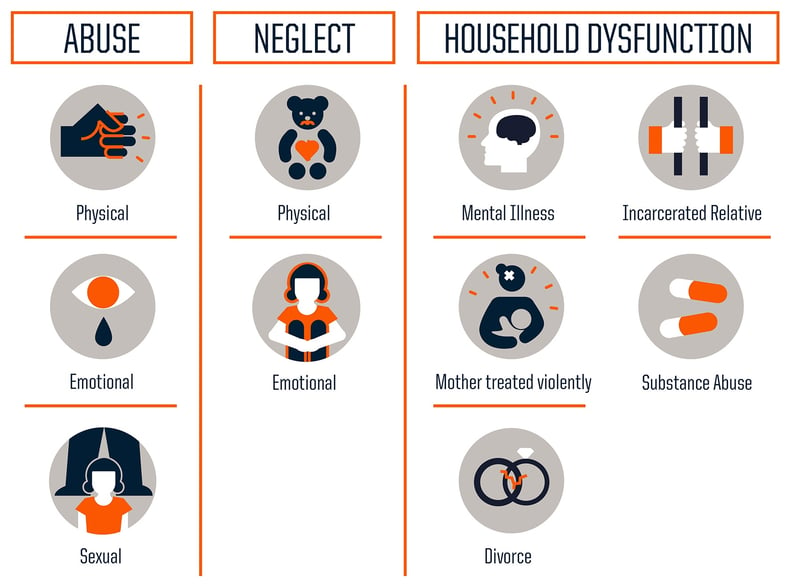
Printable Aces Test
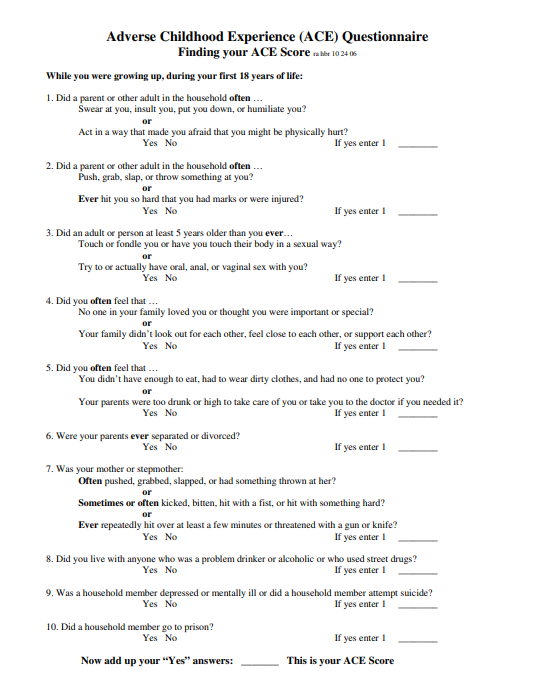
Printable Aces Test

ACEs Screening — ACEs Aware Ventura County

Ace Test Printable
(PDF) The Alcohol and Drug Cognitive Enhancement (ACE) Screening Tool

Adult ACEs Screening Tools (SelfReport; Clinical and Research Use

Resiliency Goal Setting & ACEs Screenings STRONGER TOGETHER SPRINGFIELD
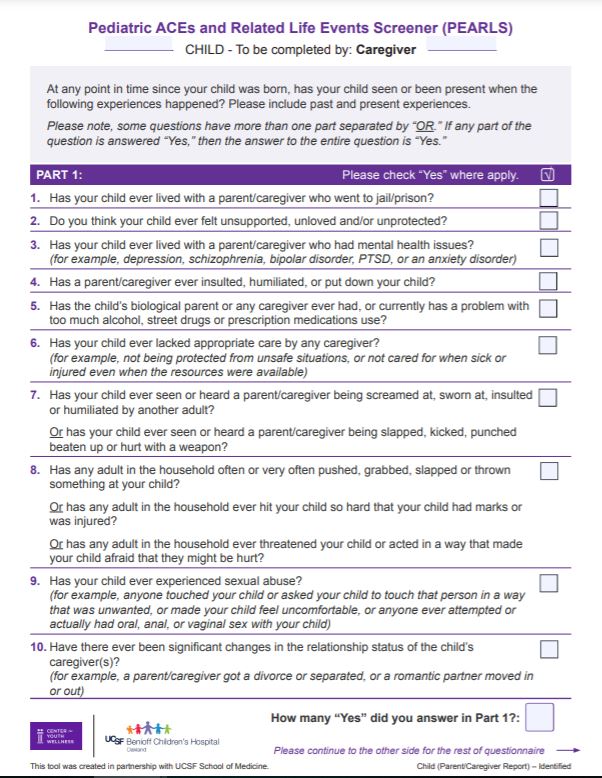
Ace Test Printable
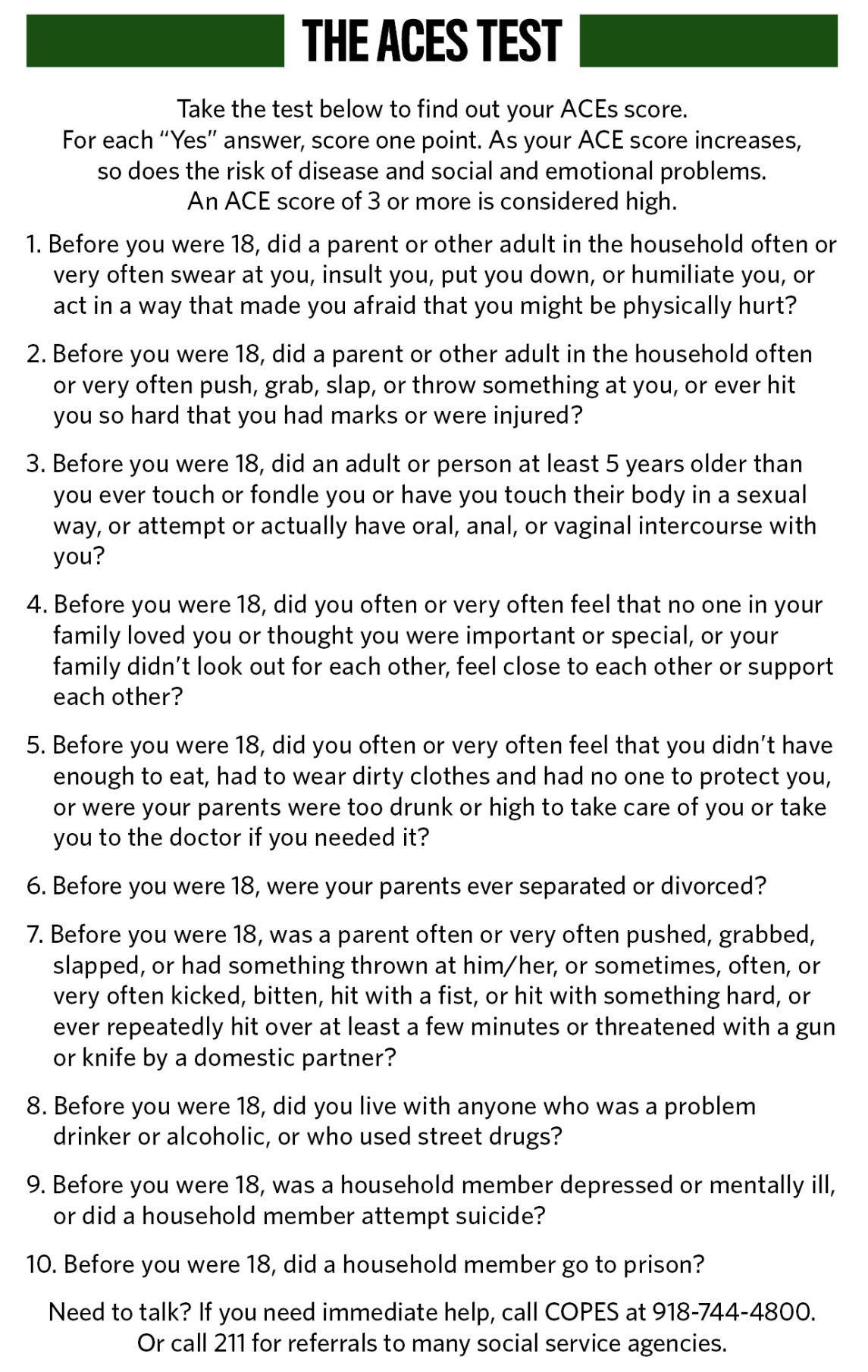
This guide supports clinic teams in identifying their approach and response to ace screenings. What is the aces questionnaire? The term adverse childhood experiences (aces) refers to a range of events that a child can experience, which leads to stress and can result in trauma and chronic stress responses. This questionnaire was used to assess participants in the original adverse childhood experiences study, conducted by cdc and kaiser permanente and published in 1998. The higher your ace score, the higher your risk of health and social problems. This screening tool, developed by the center for youth wellness and the bayview child health center (bchc), is based on the original ace questionnaire and adapted for a pediatric patient population. Some things about you that you really like? Improve efficacy and efficiency of health care; This fact sheet explains why providers should screen for aces and describes the tools that should be used to screen children, adolescents, and adults for aces. Web parents, teachers and caregivers can help children by: Over time these experiences can affect your child’s health and wellbeing. Web an ace score of 0 (zero) indicates no exposure, while an ace score of 10 indicates exposure to all trauma categories. Web adverse childhood experiences (aces) questionnaire use. Web the study’s researchers came up with an ace score to explain a person’s risk for chronic disease. You can find a sample of the questionnaire and more information and resources about aces at the centers for disease control and prevention website.
2) Read The Ace Definitions And Identify
As the ace score increases, so does the potential risk for chronic health problems. Web you get one point for each of the 10 types of trauma assessed by the ace questionnaire. · gaining an understanding of aces. · helping children identify feelings and manage emotions.
The Higher Your Ace Score, The Higher Your Risk Of Health And Social Problems.
Web use this tool to screen for adverse childhood experiences in adults and children. Below is a list of 10 categories of adverse childhood experiences (aces). Web the aces questionnaire has become an accepted screening tool. The term adverse childhood experiences (aces) refers to a range of events that a child can experience, which leads to stress and can result in trauma and chronic stress responses.
Web Adverse Childhood Experiences (Aces) Questionnaire Use.
This questionnaire was used to assess participants in the original adverse childhood experiences study, conducted by cdc and kaiser permanente and published in 1998. What is the aces questionnaire? We would like to ask you questions about your child so we can help them be as healthy as possible. Think of it as a cholesterol score for childhood toxic stress.
Improve Efficacy And Efficiency Of Health Care;
Web • putting it all together — your ace screening & clinical response approach. Below is a list of 10 categories of adverse childhood experiences (aces). Cautions & recommendations for local health departments. Web beginning june 1, 2019, the ace questionnaire shall be given to all adults ages 18 and older* who are seeking behavioral health services from the odmhsas and the ohca (soonercare/medicaid);