
Pronunciation and fluency, use of specialized vocabulary, use of grammar structures, interest shown and motivation, group coordination, and contents and creativity. One element (pacing, volume, voice clarity, or eye contact) needs some work; Uses details to enhance content. Presentation contains some fact errors or omissions. Pacing, eye contact, and volume all help the presentation.
Areas to assess may include the thoroughness of the project, speaking and presentation skills, use of visual aids, and accuracy. Pacing, eye contact, and volume all help the presentation. This can be anything from writing a paper to giving an oral presentation, and more. An oral presentation allows the student to demonstrate content knowledge by presenting the findings of an inquiry to an audience. Overall command of subject matter, responds to questions on a basic level.
Generally comfortable with material, able to answer most questions. This rubric may be used for assessing individual performance on an oral presentation. Presentation contains some fact errors or omissions. Presentation contains multiple fact errors. Pacing, eye contact, and volume all help the presentation.
Free Printable Oral Presentation Rubric

Rubrics For Oral Presentations 10 Free PDF Printables Printablee
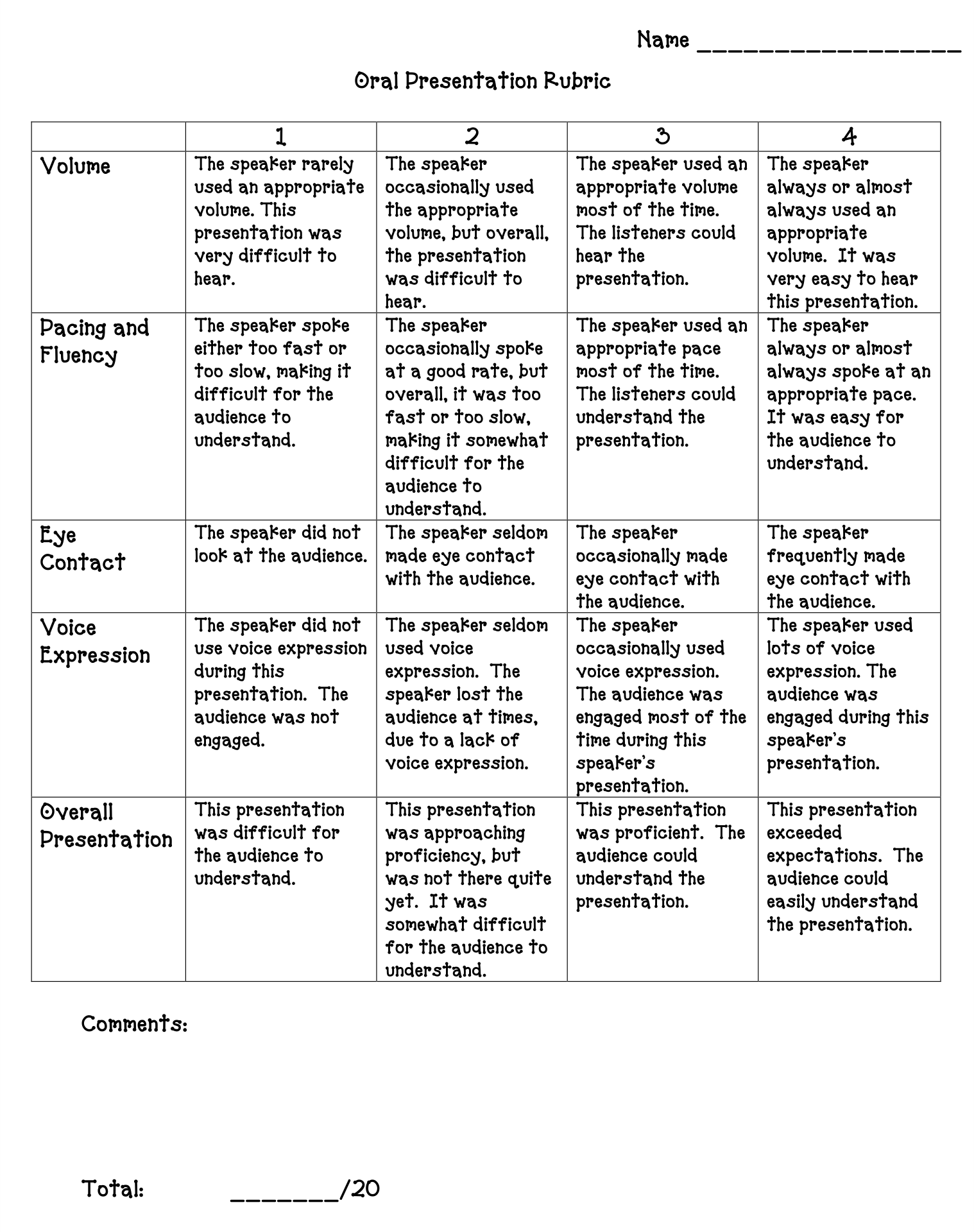
Elementary Free Printable Oral Presentation Rubric

Oral Presentation Rubric Template Purdue University Download Fillable
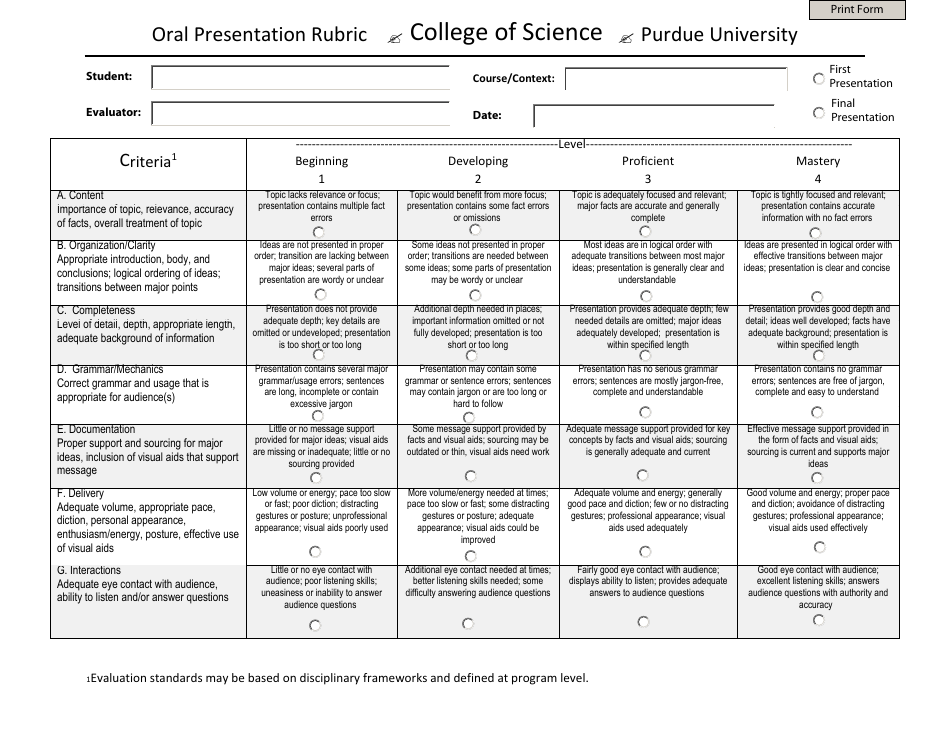
Free Printable Oral Presentation Rubric
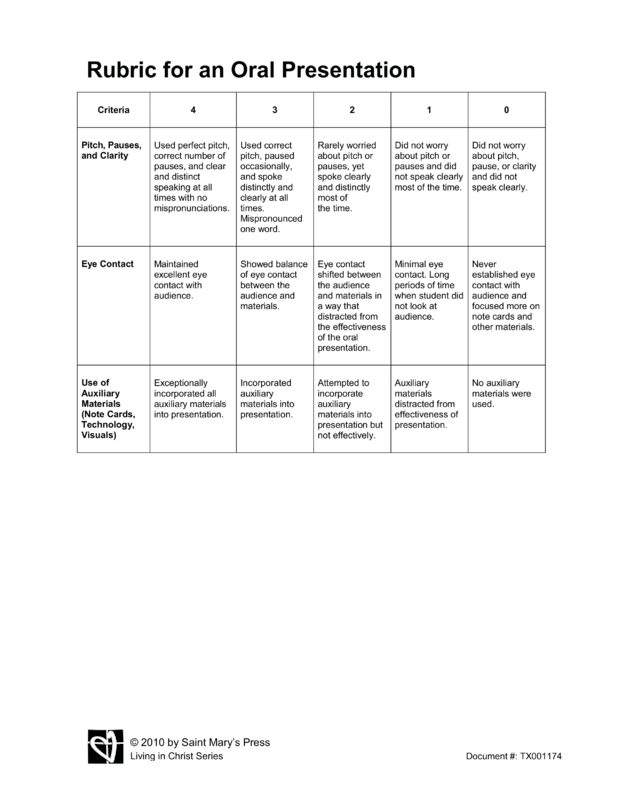
Rubrics For Oral Presentations 10 Free PDF Printables Printablee
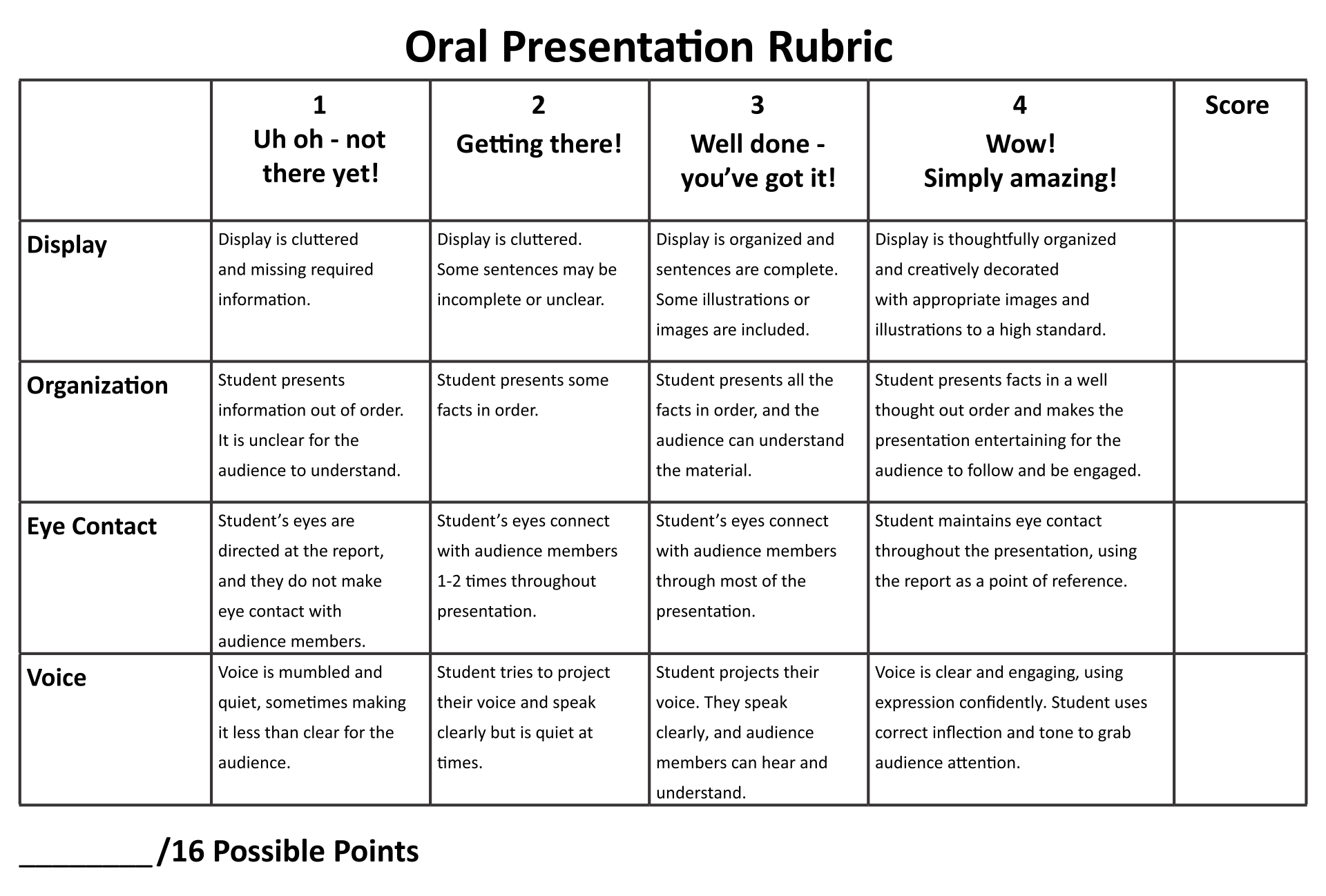
Free Printable Oral Presentation Rubric
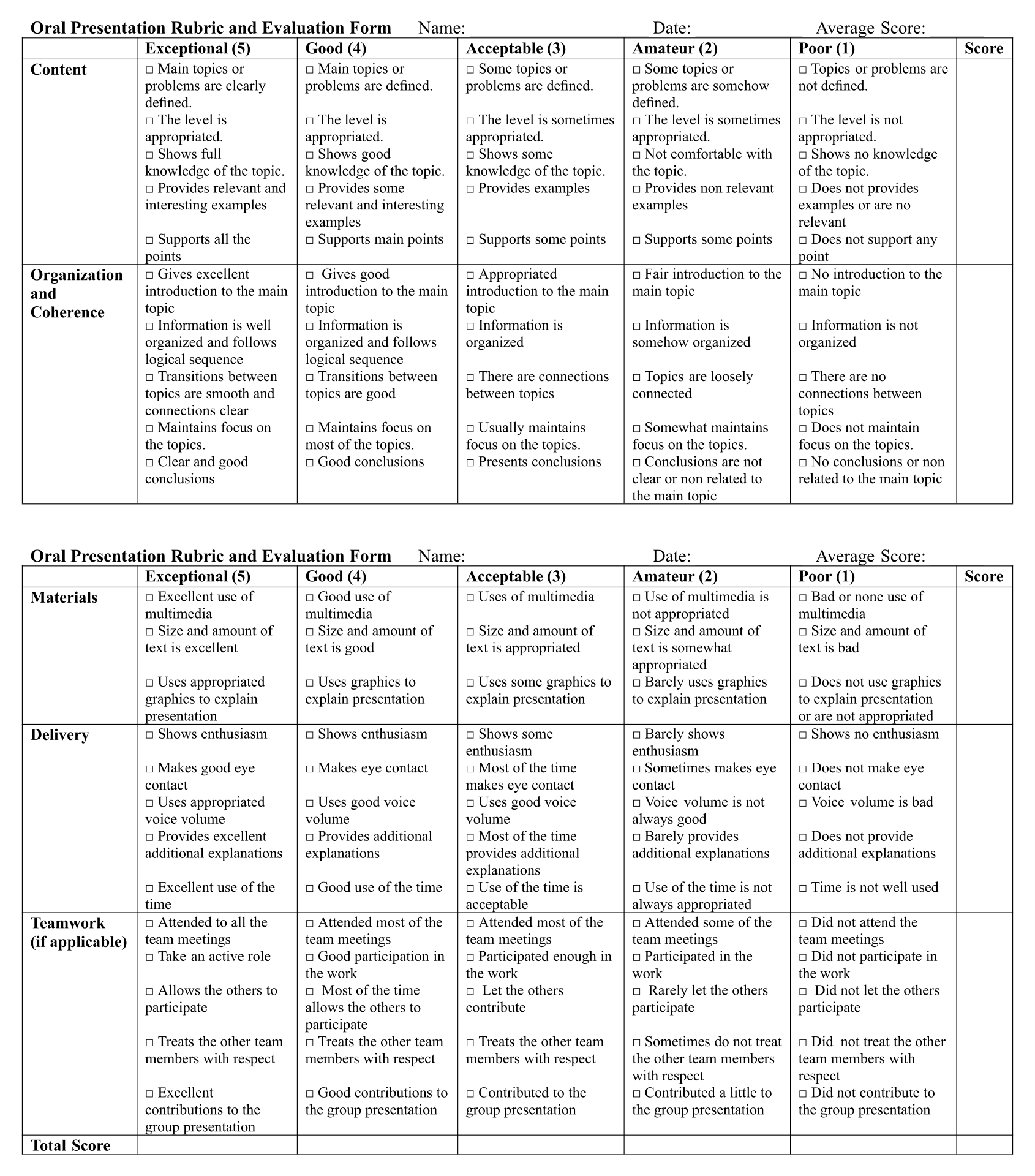
Printable Rubrics for Oral Presentations
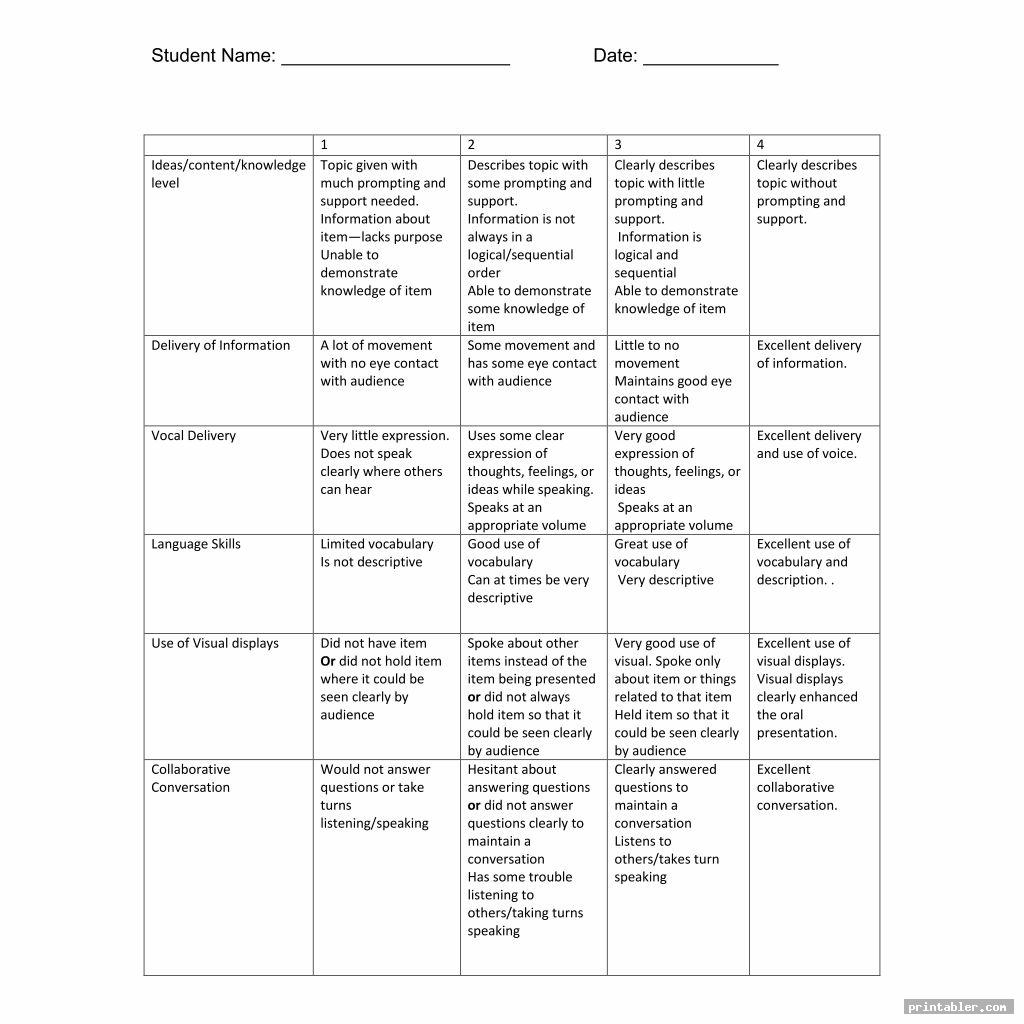
Free Printable Oral Presentation Rubric

Rubrics For Oral Presentations 10 Free PDF Printables Printablee
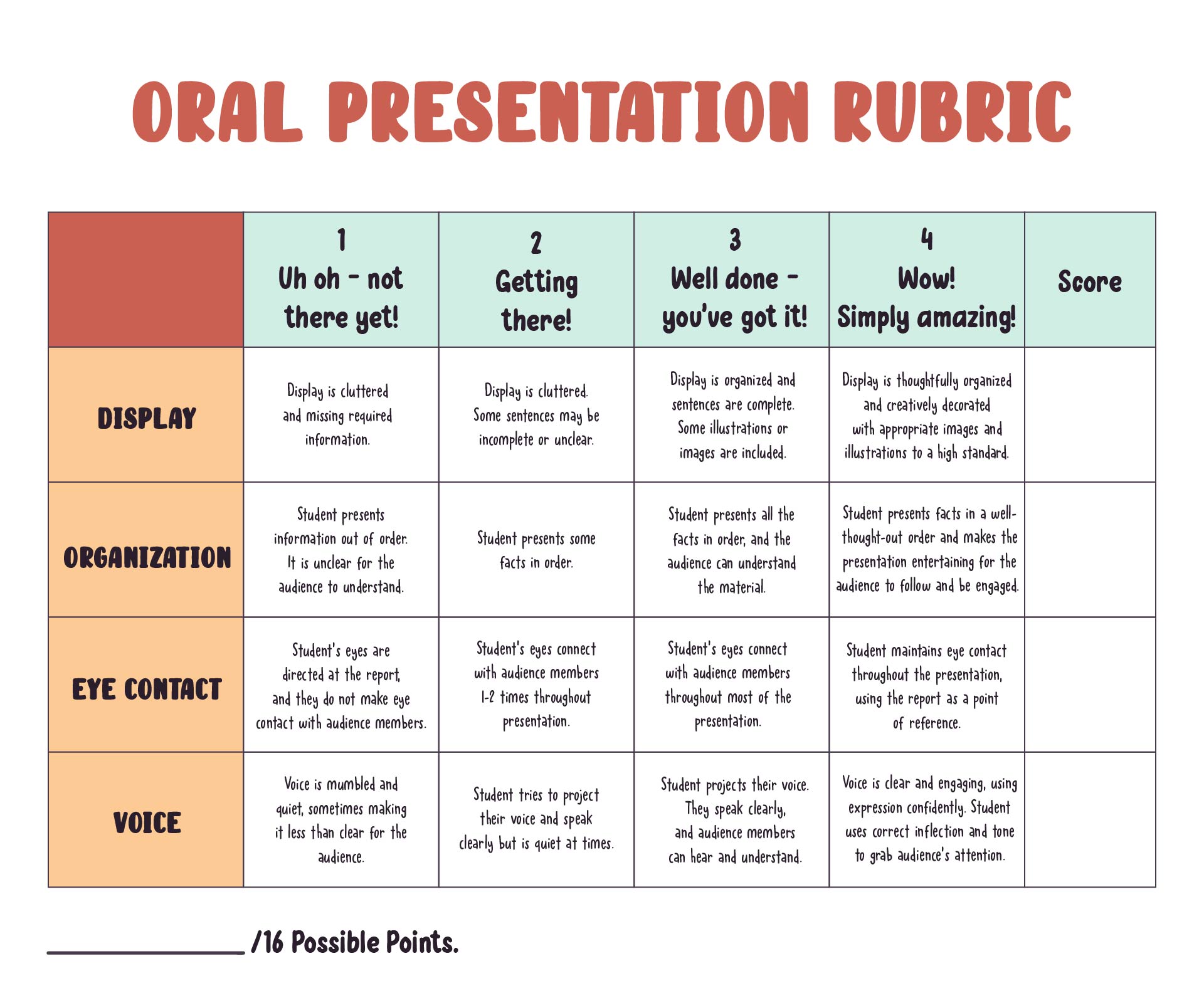
The audience may include students in the class and other classes, parents and relatives, and community members. Other elements of speech and manner are effective and help the presentation. List all of the expectations for an effective oral presentation along with a point scale to create a detailed rubric. Use this free rubric to provide students with clear expectations for their next oral presentation or speech! This rubric may be used for assessing individual performance on an oral presentation. Browse free 3rd grade oral communication rubrics on teachers pay teachers, a marketplace trusted by millions of teachers for original educational resources. Holds attention of entire audience with the use of direct eye contact, seldom looking at notes • speaks with fluctuation in volume and inflection to maintain audience interest and emphasize key points. The first area is delivery, which includes eye contact, and voice inflection. Overall command of subject matter, responds to questions on a basic level. It contains 4 levels to assess ideas/concepts, delivery of information, language skills, and collaborative conversation. Group members speak to only part of the audience. Most group members speak to the entire audience. Holds attention of entire audience with the use of direct eye contact, seldom looking at notes. You can also use them to track the progress of a student from the start of the task to the end of it. Basic understanding of material, but mastery not evident.
It Contains 4 Levels To Assess Ideas/Concepts, Delivery Of Information, Language Skills, And Collaborative Conversation.
Holds attention of entire audience with the use of direct eye contact, seldom looking at notes. Some group members speak clearly, but are difficult to understand. Generally comfortable with material, able to answer most questions. Only 1 or 2 group members speak and can be understood.
It Is Recommended That Each Speaker Be Evaluated Separately For Panel Or Group Presentations.
This rubric may be used for assessing individual performance on an oral presentation. Printable rubrics for oral presentations are valuable tools for both teachers and students, as they provide clear guidelines and criteria for assessing and improving presentation skills, fostering learning and professional growth. You can also use them to track the progress of a student from the start of the task to the end of it. Presentation contains some fact errors or omissions.
This Can Be Anything From Writing A Paper To Giving An Oral Presentation, And More.
This document contains a rubric for evaluating oral presentations with categories for organization, content, and presentation. Download this free printable today! This editable rubric assesses the appropriate use of eye contact, clarity, volume, and body language during oral presentations. This rubric assesses oral presentations across several components:
The Rubric Allows Teachers To Assess Students In Several Key Areas Of Oral Presentation.
Pacing, eye contact, and volume all help the presentation. Pronunciation and fluency, use of specialized vocabulary, use of grammar structures, interest shown and motivation, group coordination, and contents and creativity. Major facts are accurate and generally complete. Adaptable to any oral presentation context!