
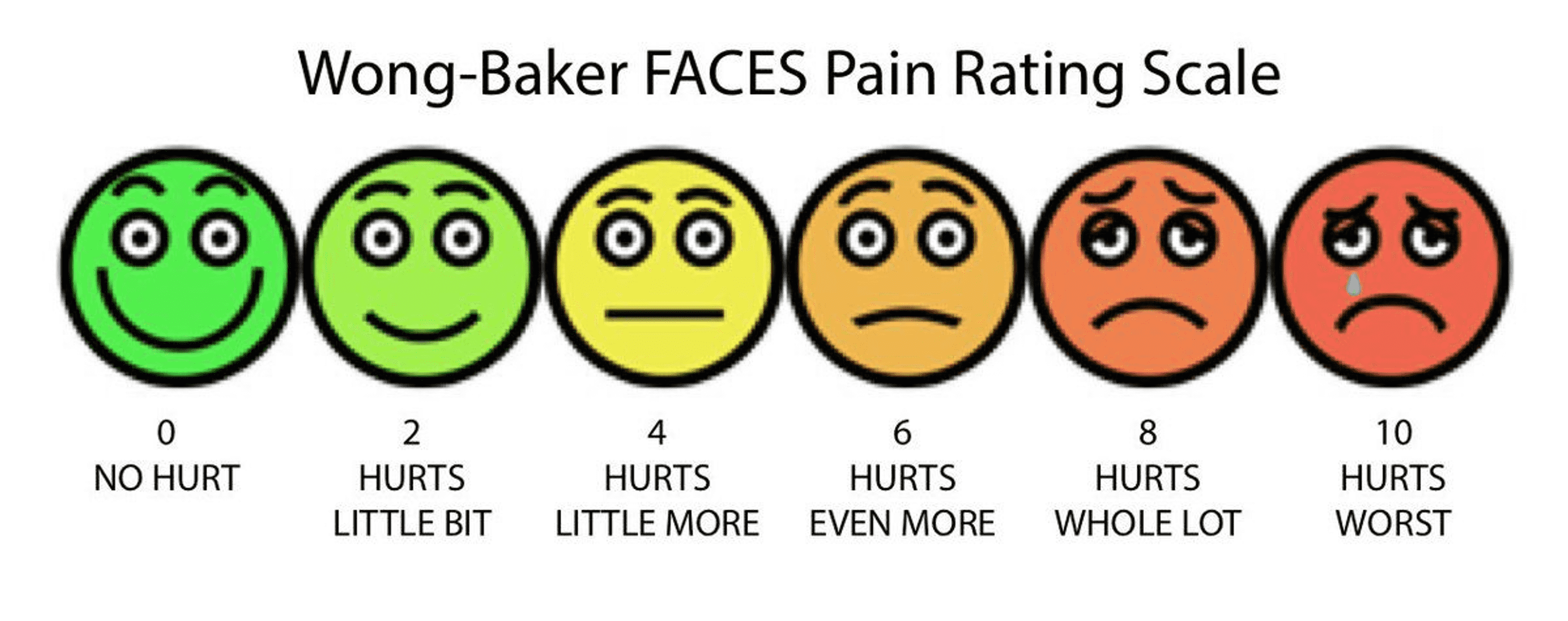
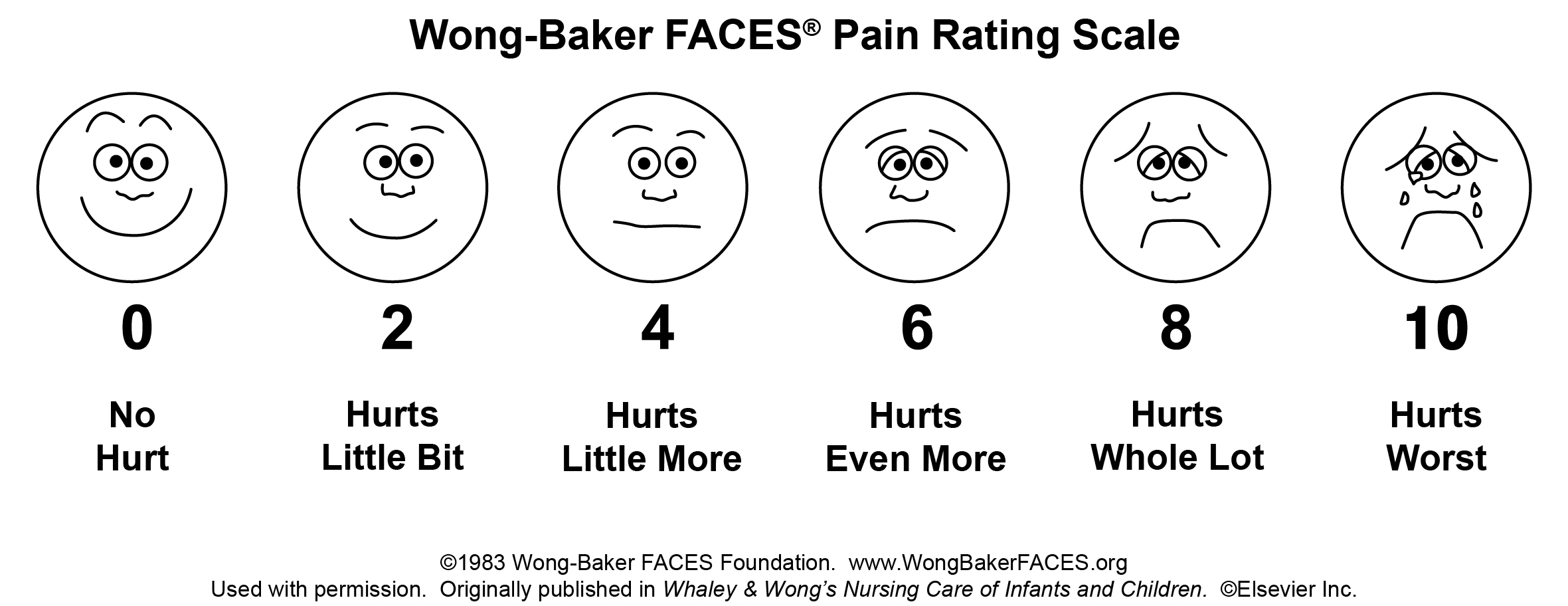
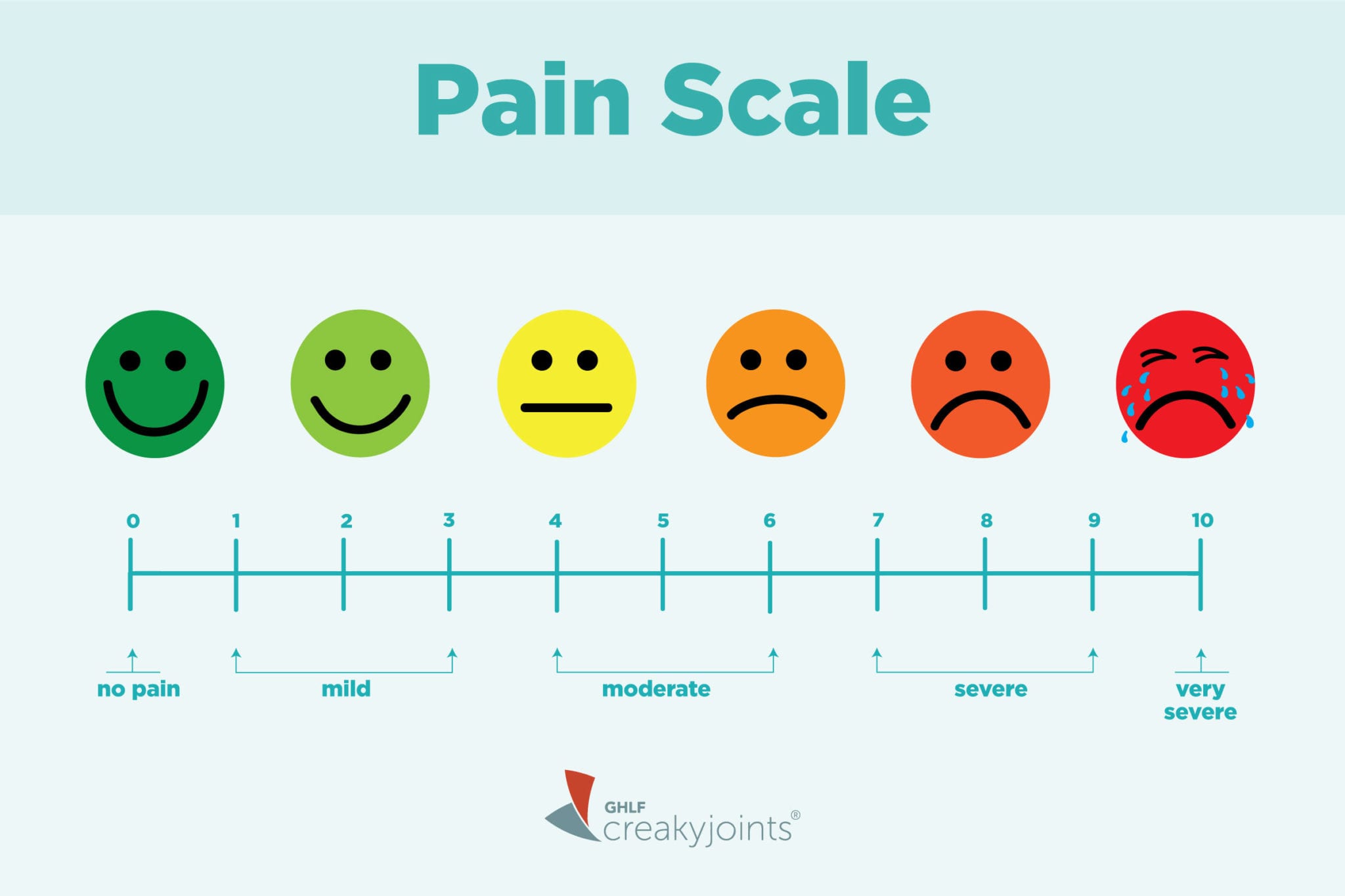
Face 6 hurts even more. Web face 3 hurts even more. The scale shows a series of faces ranging from a happy face at 0 , or no hurt, to a crying face at 10, which represents hurts like the worst pain imaginable. Web our printable pain scale chart is a handy reference for people in pain to be able to point to the current pain level they are experiencing. 0 = very happy, no hurt.
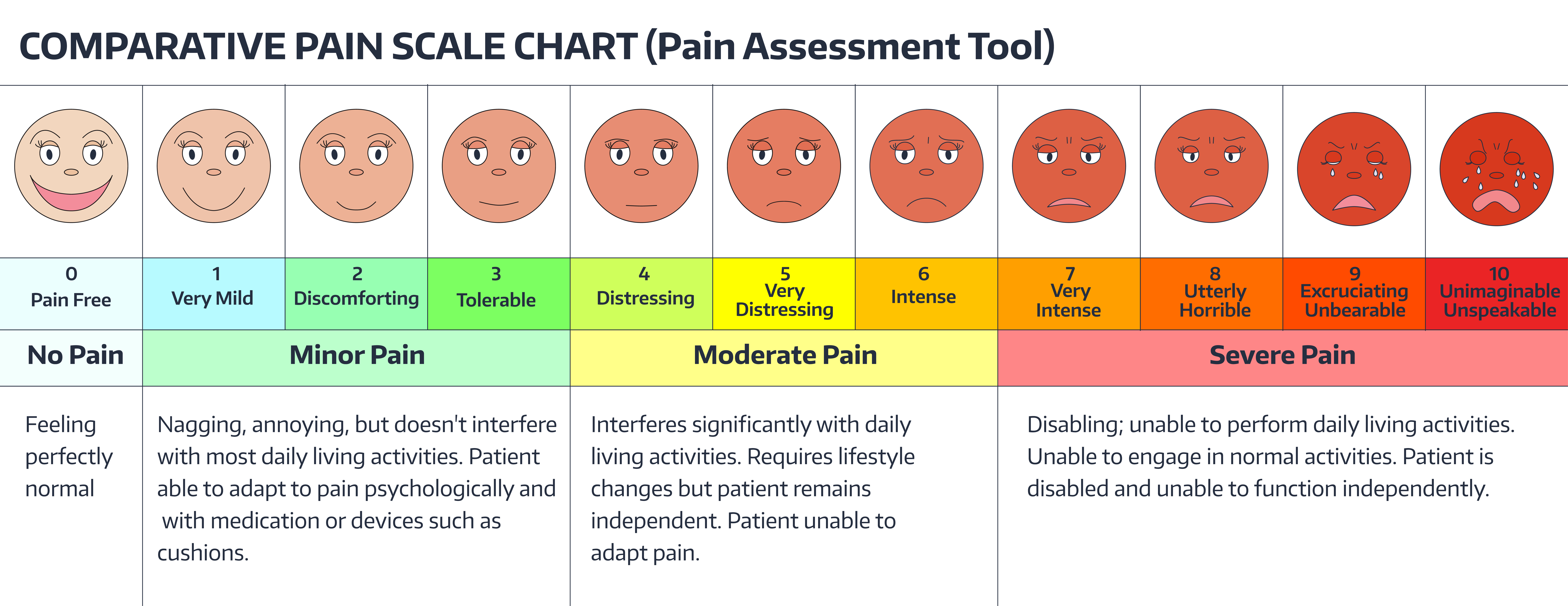
Adults and children (> 3 years old) in all patient care settings. Face 4 hurts a whole lot. Able to adapt to pain psychologically and with medication or devices such as cushions. “the faces show how much pain or discomfort someone is feeling. It can also be used for older children who have trouble using the number scale.
Face 8 hurts a whole lot. The face on the left shows no pain. Able to adapt to pain psychologically and with medication or devices such as cushions. 2 = hurts a little more. The scale shows a series of faces ranging from a happy face at 0 , or no hurt, to a crying face at 10, which represents hurts like the worst pain imaginable.
110 Pain Chart Faces

Printable Pain Scale Faces

Printable Pain Scale Faces

Printable pain scale faces 1 10 delightvsa

Cureus Phase 2 Assessment of a New Functional Pain Scale by Comparing
Printable Faces Pain Scale
Faces pain rating scale. Comparative pain scale chart. Pain assessment
Printable Pain Scale With Faces
Chronic Pain Scale
Free Printable Pain Scale Chart Printable Form, Templates and Letter
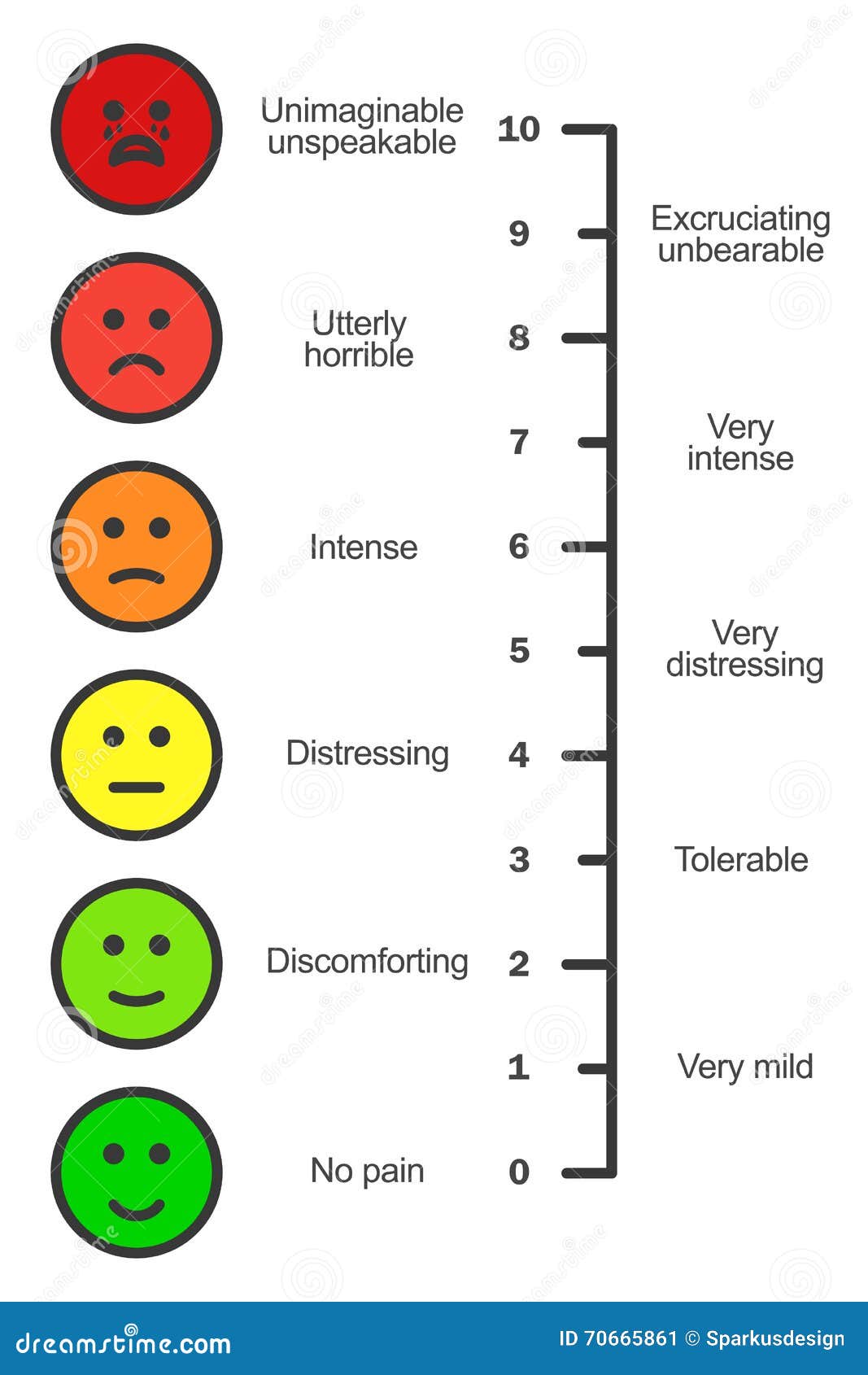
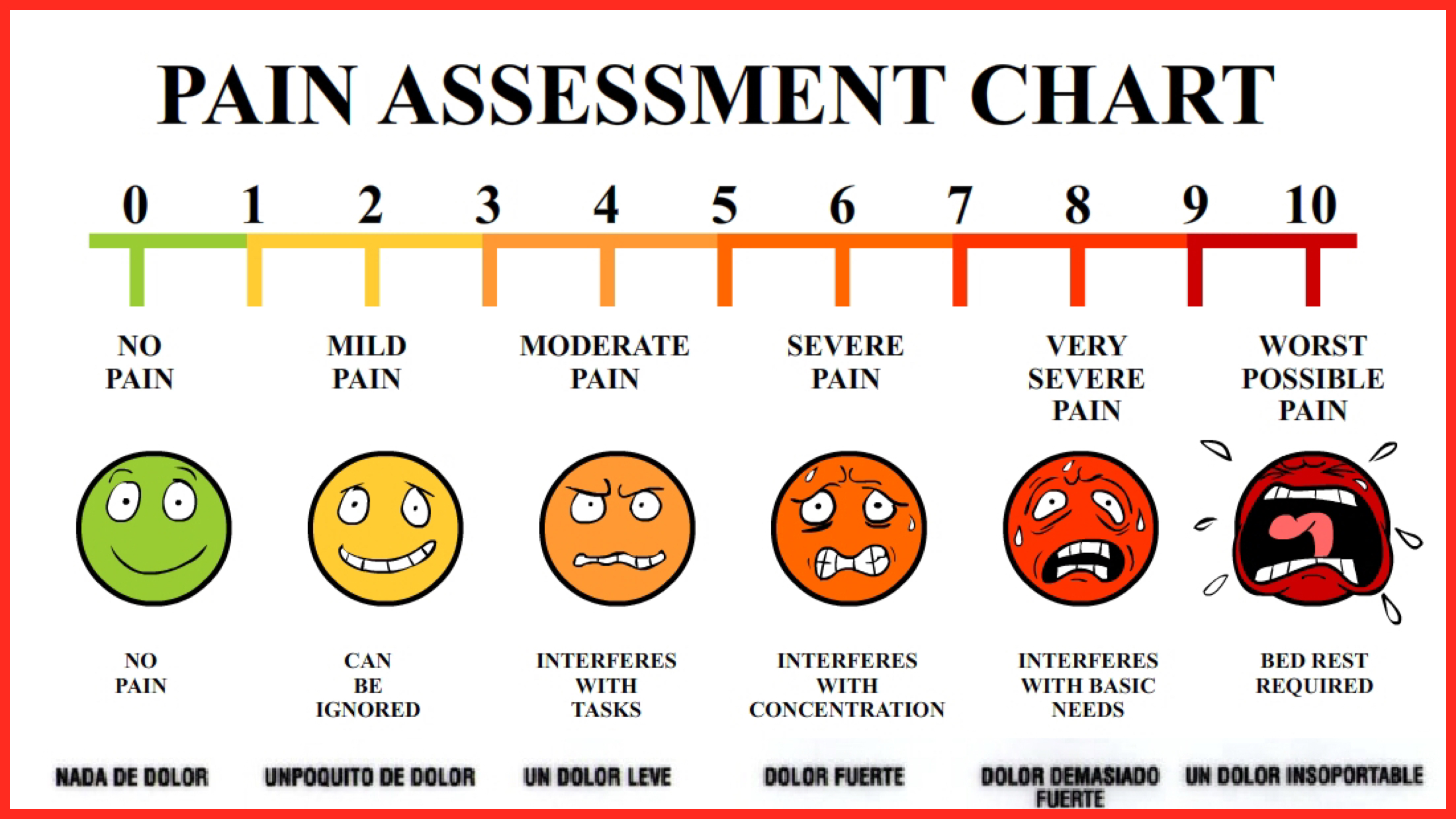
“the faces show how much pain or discomfort someone is feeling. Face 6 hurts even more. It can also be used for older children who have trouble using the number scale. Face 4 hurts a little bit more. Web explain to the person that each face represents a person who has no pain (hurt), or some, or a lot of pain. Each face shows more and more pain and the last face shows the worst pain possible. Adults and children (> 3 years old) in all patient care settings. This scale is intended to measure how children feel inside, not how their face looks. Web score the chosen face 0, 2, 4, 6, 8, or 10, counting left to right, so '0' = 'no pain' and '10' = 'very much pain.' do not use words like 'happy' and 'sad'. Web face 3 hurts even more. Ask the person to choose the face that best describes how he is feeling. You could also use the printable pdf to guide you as well. 5 = hurts as much as you can imagine. (don’t have to be crying to feel this much pain) explain to the person that each face is for a person who feels happy. This nonverbal assessment relies on facial expressions when identifying and.
(Don’t Have To Be Crying To Feel This Much Pain) Explain To The Person That Each Face Is For A Person Who Feels Happy.
Each face shows more and more pain and the last face shows the worst pain possible. 4 = hurts a whole lot. Face 3 hurts even more. The emotional faces range from smiling to grimacing.
It Can Also Be Used For Older Children Who Have Trouble Using The Number Scale.
Able to adapt to pain psychologically and with medication or devices such as cushions. Web explain to the person that each face represents a person who has no pain (hurt), or some, or a lot of pain. 5 = hurts as much as you can imagine. Face 4 hurts a whole lot.
This Scale Is Intended To Measure How Children Feel Inside, Not How Their Face Looks.
Face 4 hurts a little bit more. Face 8 hurts a whole lot. Ask the person to choose the face that best describes how he is feeling. Face 6 hurts even more.
The Nurse, Nursing Assistant Or Child Life Specialist Can Help You Choose The Best Tools And Show You How To Use Them.
Face 2 hurts just a little bit. Web this pain assessment tool is intended to help patient care providers access pain accord.ng to individual parent needs. Face 4 hurts a little bit more. Children match their level of pain to a face on the scale.