
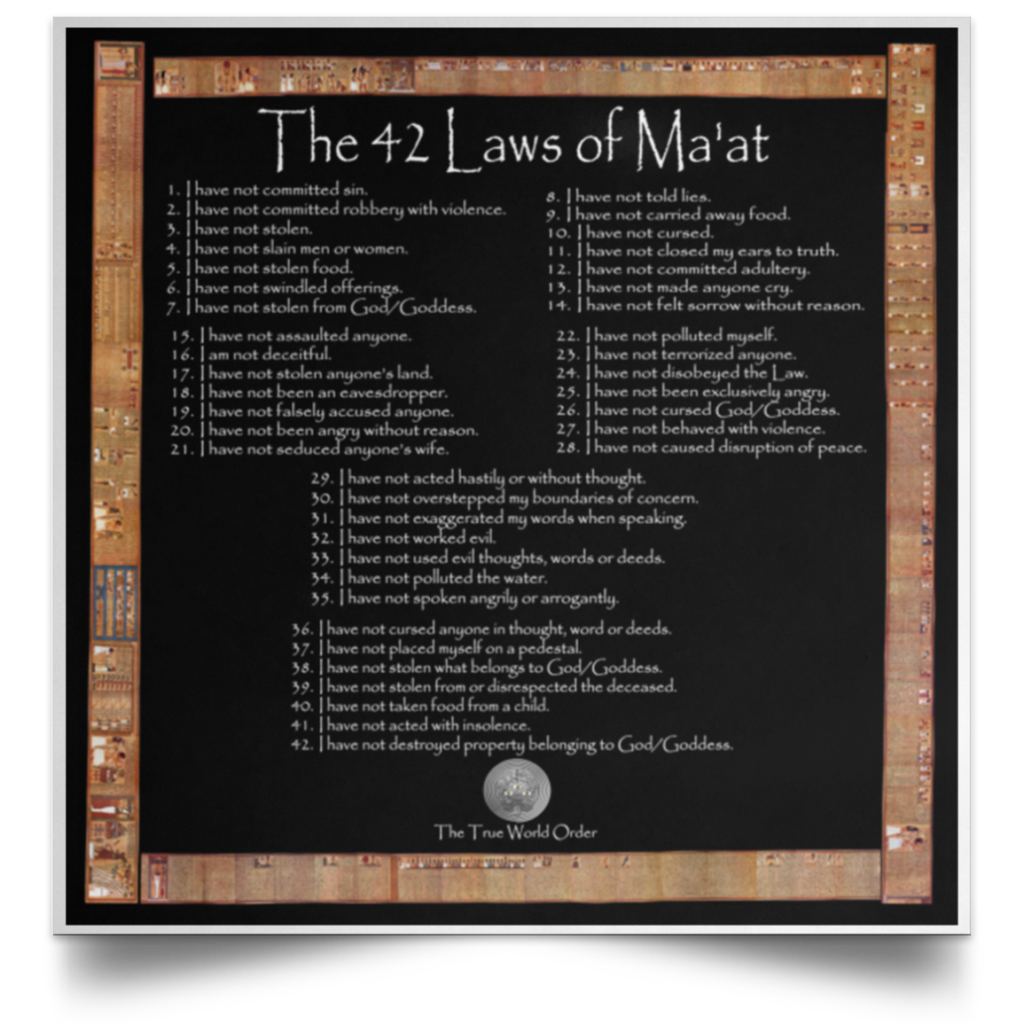
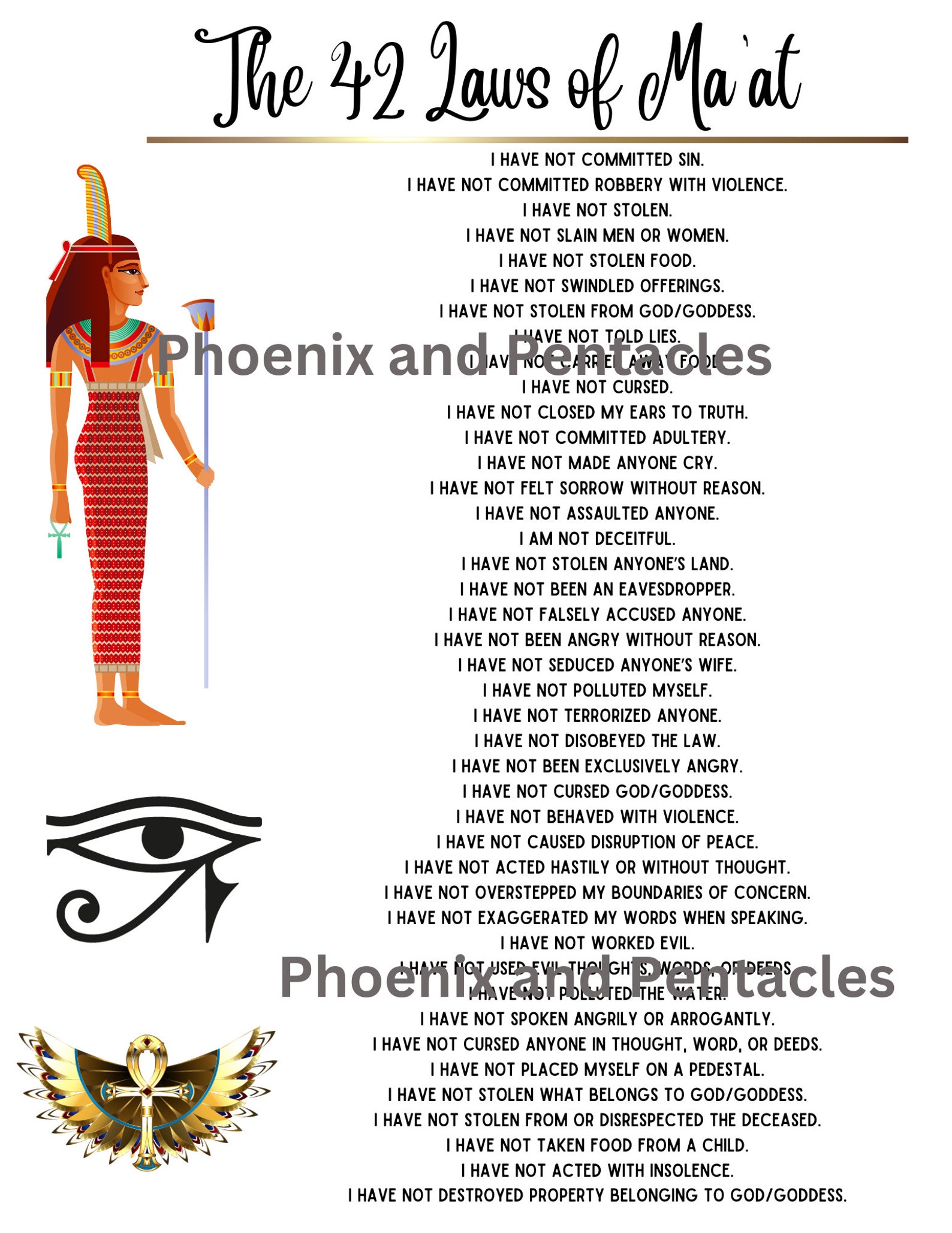
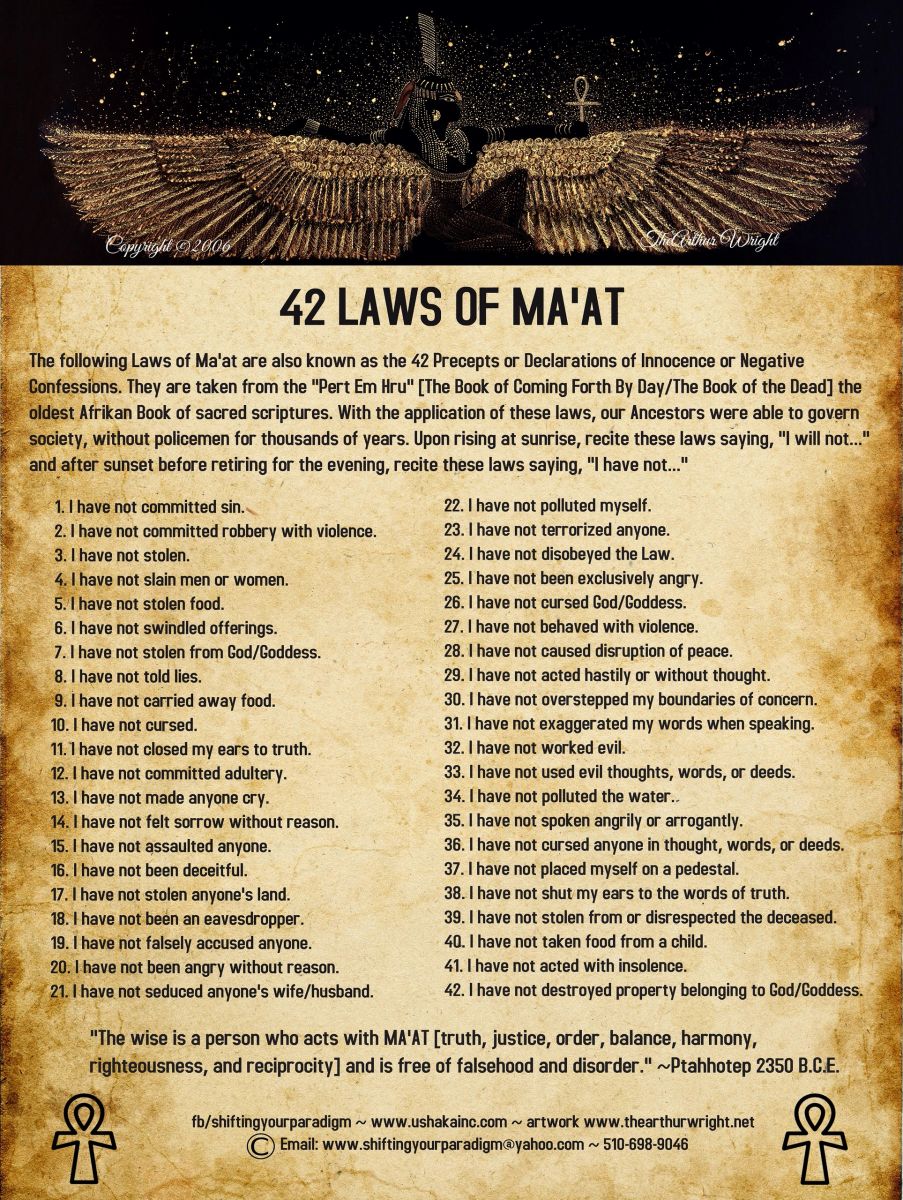
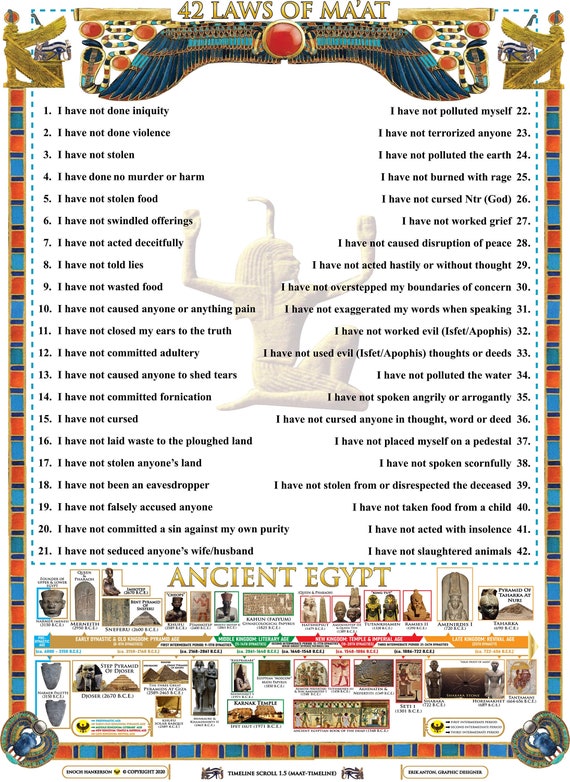
I have not stolen food. The following are the 42 ideals of ma’at as the 42 negative confessions translated by e. The document lists the 42 divine laws of maat. The laws outline moral principles one should follow, such as not committing sins like theft, violence, lying, adultery, or causing harm through words or actions. I have not slain men or women.
I have not slain men or women. I have not swindled offerings. I have not committed robbery with violence. I have not committed sin. The feather was weighed against their soul while they stated the 42 negative confessions.
The principles of ma’at are: She is most often depicted as a woman with wings or a single white ostrich feather. The 42 ideals of maat as defined by rev. I have not told lies. During the reign of pharaoh menes, around 2925 b.c.e., after the unification of upper and lower kemet, archaeological finds evidence administration of the 42 laws of maat among the kemet people as deduced from kemet coffin texts or funerary papyri dating from this period.
Why Couldnt A Woman Be A Divine Ruler In Ancient Egyp vrogue.co

“42 Laws of Ma’at” The True World Order
.The 42 Divine Principles of Ma'at Kemet Pinterest

42 Laws Of Maat Printable Printable Word Searches

The 42 Laws of Ma'at ONE SHEET 8.5x11 in PDF Etsy
42 Laws Of Ma'at Printable

42 Laws Of Maat Printable
42 Laws of Maat Ancient Egypt Poster Etsy UK
42 Laws Of Maat Printable
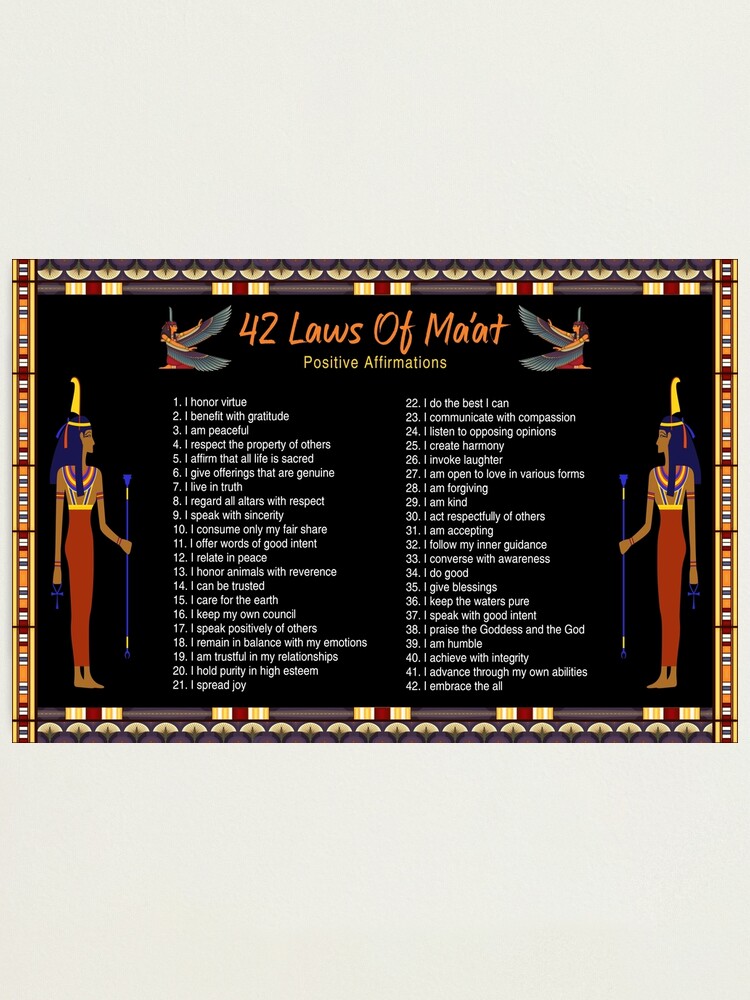
Pin on Egypt

The document lists 42 statements declaring that the speaker has not committed various sins and transgressions. I have not committed robbery with violence. The 42 divine principles of ma’at 1) praise ma’at, i have not committed sin. Truth, justice, harmony, balance, order, reciprocity, sobriety and propriety. I have not committed robbery with violence. I have not carried away food. 6) praise ma’at, i have not swindled offerings. I have not stolen food. I have not told lies. The 42 divine principles of maat in budge's native english follows: I have not committed sin. She is most often depicted as a woman with wings or a single white ostrich feather. Central to this order and virtue are the acts of righteousness and the highest form of right action is selfless service. I have not slain men or women. The 42 laws of ma'at, stemming from ancient egyptian civilization, are a set of principles that embody the ethical and moral guidelines believed to govern the universe.
I Have Not Stolen Food.
They confess to not having committed acts like robbery, theft, violence, lying, adultery, pollution, disobedience of laws, anger, and disrespect of gods or the deceased. The laws outline moral principles one should follow, such as not committing sins like theft, violence, lying, adultery, or causing harm through words or actions. I have not slain men or women. I regard all altars with respect.
The Actions Of A Person Living By Maat Should Include:
I have not committed robbery with violence. There are 42 laws that the deceased reads defending himself during his trial in the nether world and he must be honest to survive the torment, and they refer to the deep moral controls in the egyptian religion and the whole of social life, and these laws, we can call them the negative During the reign of pharaoh menes, around 2925 b.c.e., after the unification of upper and lower kemet, archaeological finds evidence administration of the 42 laws of maat among the kemet people as deduced from kemet coffin texts or funerary papyri dating from this period. The 42 laws of maat go beyond avoiding evil actions;
42 Ideals Of Maat ~ A Sacred Visual And Auditory Invocation For Universal Love, Peace And Optimism.
A black swan temple production. With these laws, our ancient afrakan ancestors maintained a society without policemen for thousands of years. I have not told lies. The following are the 42 ideals of ma’at as the 42 negative confessions translated by e.
I Have Not Committed Sin.
By promoting virtues like honesty, respect, and empathy, these ancient laws show us how to contribute positively to the world. I have not told lies. Originating from the goddess ma'at, who personifies truth, justice, and cosmic order, these laws served as the foundation for a harmonious society in ancient egypt. I have not swindled offerings.